 Fishing Trips Corfu
Complete Ionian Sea fishing guide
Fish Species in Corfu
Explore 38 fish and cephalopod species associated with Corfu, including habitats, fishing methods, seasons, relative catch difficulty and responsible local guidance.
Corfu beneath the surface
Fish species of the Ionian Sea
A painterly view of seabream, dentex, amberjack, red mullet, octopus, cuttlefish and schooling fish associated with Corfu’s diverse marine habitats. Call +30 697 212 9213Direct answer
What fish can you catch around Corfu?
Corfu’s rocky coastline, seagrass, sand, reef structure and deeper Ionian water support seabream, seabass, dentex, amberjack, groupers, pandora, red mullet, bonito, barracuda, mackerel, squid, cuttlefish and octopus. Species activity changes with season, depth, wind, current, water temperature and natural prey. No guide or fishing trip can guarantee a particular catch.Fish species in Corfu at a glance
Corfu’s Ionian waters contain coastal, reef, bottom and pelagic marine life. Beginners commonly learn about seabream, pandora, red mullet and small schooling fish, while experienced anglers may discuss dentex, amberjack, bonito or other seasonal predators. Squid, cuttlefish and octopus are cephalopods rather than fish, but they are included because they are important to local fishing culture. The most suitable species and technique depend on season, depth, habitat, weather and natural fish activity. Compare the traditional fishing boat trips and methods used in Corfu, explore family fishing trips near Benitses, Moraitika and Messonghi, learn about deep-sea fishing in Corfu, or return to the Fishing Trips Corfu homepage to choose a suitable experience.38 speciesCoastal, reef, bottom and pelagic examples
1–5 scaleEditorial catch-difficulty comparison
Local methodsBottom fishing, trolling, spinning and jigging
Responsible guideLegal sizes and current rules always apply
Searchable Corfu fish guide
Main fish and cephalopod species
Search by common, scientific or Greek name, or filter the guide by relative catch difficulty.Τσιπούρα
3/5
Gilthead seabream
Sparus aurataHabitatCoastal lagoons, sand, seagrass and mixed seabed
MethodBottom fishing, light tackle
SeasonSpring–autumn
Λαβράκι
4/5
European seabass
Dicentrarchus labraxHabitatHarbour approaches, river mouths, rocky and sandy coasts
MethodSpinning, trolling, bait fishing
SeasonAutumn–spring
Συναγρίδα
5/5
Common dentex
Dentex dentexHabitatRocky reefs, drop-offs and deeper structure
MethodJigging, trolling, live or natural bait
SeasonSpring–autumn
Μαγιάτικο
5/5
Greater amberjack
Seriola dumeriliHabitatOffshore reefs, wrecks and deep structure
MethodVertical jigging, trolling
SeasonLate spring–autumn
Ροφός
5/5
Dusky grouper
Epinephelus marginatusHabitatRocky caves, ledges and reefs
MethodBottom techniques and jigging where permitted
SeasonWarmer months
Σφυρίδα
4/5
White grouper
Epinephelus aeneusHabitatMixed rocky and sandy bottom
MethodBottom fishing and jigging
SeasonSpring–autumn
Στήρα
4/5
Goldblotch grouper
Epinephelus costaeHabitatRocky slopes and deeper reefs
MethodBottom fishing, jigging
SeasonSpring–autumn
Λυθρίνι
2/5
Common pandora
Pagellus erythrinusHabitatSand, mud and mixed seabed
MethodBottom fishing
SeasonMost of the year
Κακαρέλος
2/5
Common two-banded seabream
Diplodus vulgarisHabitatRocky coast, seagrass and mixed ground
MethodBottom fishing, float fishing
SeasonMost of the year
Σαργός
3/5
White seabream
Diplodus sargusHabitatRocky shores, reefs and harbour walls
MethodBottom fishing, float fishing
SeasonMost of the year
Σπάρος
1/5
Annular seabream
Diplodus annularisHabitatSeagrass beds, sand and coastal shallows
MethodLight bottom fishing
SeasonSpring–autumn
Μυτάκι
3/5
Sharpsnout seabream
Diplodus puntazzoHabitatRocky reefs and mixed coastal habitats
MethodBottom fishing
SeasonAutumn–spring
Σκαθάρι
3/5
Black seabream
Spondyliosoma cantharusHabitatRocky and mixed bottom, sometimes in schools
MethodBottom fishing
SeasonAutumn–spring
Σάλπα
3/5
Salema
Sarpa salpaHabitatSeagrass meadows and rocky shallows
MethodFloat and light bottom fishing
SeasonSpring–autumn
Φαγκρί
4/5
Red porgy
Pagrus pagrusHabitatRocky and gravel bottom at moderate depth
MethodBottom fishing, jigging
SeasonSpring–autumn
Μουσμούλι
2/5
Axillary seabream
Pagellus acarneHabitatSand, mud and deeper coastal water
MethodBottom fishing
SeasonMost of the year
Κουτσομούρα
2/5
Red mullet
Mullus barbatusHabitatSand and mud
MethodLight bottom fishing
SeasonSpring–autumn
Μπαρμπούνι
3/5
Striped red mullet
Mullus surmuletusHabitatRocky-sandy transitions and seagrass
MethodLight bottom fishing
SeasonSpring–autumn
Μπακαλιάρος
4/5
European hake
Merluccius merlucciusHabitatDeeper muddy and shelf waters
MethodDeep bottom fishing
SeasonCooler periods and deep-water trips
Χριστόψαρο
4/5
John dory
Zeus faberHabitatNear-bottom coastal and shelf water
MethodSlow trolling, bottom techniques
SeasonAutumn–spring
Παλαμίδα
4/5
Atlantic bonito
Sarda sardaHabitatOpen coastal water and baitfish schools
MethodTrolling, spinning
SeasonLate summer–autumn
Κοπάνι
4/5
Little tunny
Euthynnus alletteratusHabitatOpen coastal and offshore water
MethodTrolling, casting
SeasonSummer–autumn
Ερυθρός τόνος
5/5
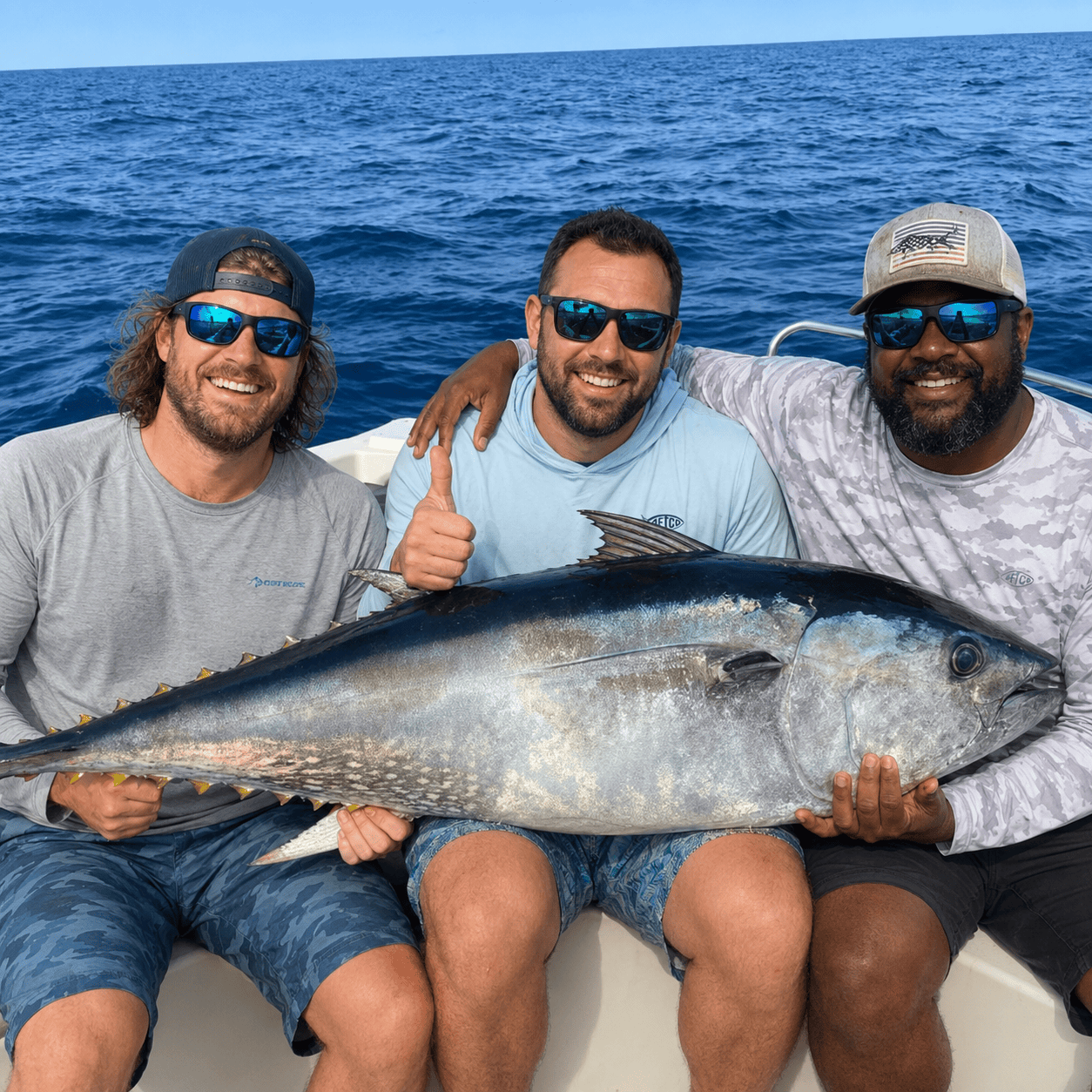
Bluefin tuna
Thunnus thynnusHabitatOffshore migratory routes
MethodAuthorised specialist trolling
SeasonHighly regulated seasonal opportunity
Μεσογειακός λευκός μάρλιν
5/5
Mediterranean spearfish
Tetrapturus beloneHabitatOpen offshore Ionian water
MethodSpecialist trolling
SeasonWarm-water periods
Λούτσος
4/5
Mediterranean barracuda
Sphyraena viridensisHabitatRocky points, harbour approaches and baitfish areas
MethodSpinning, trolling
SeasonLate summer–winter
Γοφάρι
4/5
Bluefish
Pomatomus saltatrixHabitatCoastal channels, bays and baitfish schools
MethodSpinning, trolling
SeasonSummer–autumn
Σκουμπρί
2/5
Atlantic mackerel
Scomber scombrusHabitatOpen coastal water
MethodSabiki, spinning, trolling
SeasonCooler months and seasonal schools
Σαυρίδι
1/5
Mediterranean horse mackerel
Trachurus mediterraneusHabitatCoastal and offshore schools
MethodSabiki, light spinning
SeasonMost of the year
Ζαργάνα
3/5
Garfish
Belone beloneHabitatSurface coastal water
MethodFloat fishing, light spinning, trolling
SeasonAutumn–winter
Λίτσα
5/5
Leerfish
Lichia amiaHabitatBeaches, river mouths and open coastal water
MethodSpinning, trolling
SeasonSummer–autumn
Κυνηγός / Λαμπούκα
4/5
Common dolphinfish
Coryphaena hippurusHabitatOffshore floating objects and warm pelagic water
MethodTrolling, casting
SeasonLate summer–autumn
Μουγγρί
4/5
Conger eel
Conger congerHabitatRocky holes, wrecks and deep structure
MethodHeavy bottom fishing
SeasonMost of the year, often low light
Σμέρνα
4/5
Moray eel
Muraena helenaHabitatRocky holes and reefs
MethodBottom fishing
SeasonWarmer months
Σκορπίνα
3/5
Scorpionfish
Scorpaena scrofaHabitatRocky bottom and reefs
MethodBottom fishing
SeasonMost of the year
Δράκαινα
3/5
Weever fish
Trachinus dracoHabitatSand and shallow soft bottom
MethodBottom fishing
SeasonWarm months
Καλαμάρι
3/5
Mediterranean squid
Loligo vulgarisHabitatCoastal water, seagrass edges and deeper channels
MethodEging / squid jigs
SeasonAutumn–winter
Σουπιά
3/5
Common cuttlefish
Sepia officinalisHabitatSand, mud and seagrass
MethodCuttlefish jigs and traditional methods
SeasonWinter–spring
Χταπόδι
3/5
Common octopus
Octopus vulgarisHabitatRocky holes, reefs and mixed coastal bottom
MethodRegulated traditional or recreational techniques
SeasonVaries by rules and season
Local departures from Benitses Marina
Kalypso Fishing Trips with Captain Vasilis Kontos
Hands-on Ionian fishing, coastal cruising and swimming stops can be arranged directly from Benitses, depending on the selected trip and sea conditions.What the experience may include
- Traditional Greek-style bottom fishing or drifting
- Fishing equipment and bait provided onboard
- Swimming or sightseeing near selected coves and beaches
- Fresh-catch meal arrangements onboard or at a taverna when confirmed
- Half-day or full-day options tailored to the group
A practical comparison
Fishing seasons, methods and catch difficulty
The scores compare typical technique demands, fish strength and habitat. They are not scientific measurements or catch guarantees.1/5 AccessibleIntroductory light-tackle species
2/5 ModerateBasic technique and timing needed
3/5 MediumMore selective fishing or stronger fish
4/5 HardSpecialist location, tackle or presentation
5/5 Very hardPowerful, rare, regulated or highly technical targets
Seasonal overview
- Spring: varied coastal and reef opportunities
- Summer: early-morning family trips and pelagic activity
- Autumn: broad coastal variety and predator movement
- Winter: selected bottom fishing, squid and cuttlefish
Common methods
- Bottom fishing and traditional handlines
- Spinning and coastal lure fishing
- Trolling for moving pelagic fish
- Jigging over deeper structure
- Dedicated squid and cuttlefish jigs
Protect tomorrow’s catch
Responsible fishing in Corfu
Current Greek and European rules take priority over every website guide. Species identification, minimum sizes, protected status, seasons, bag limits and permits must be checked before retaining a catch.- Release protected and undersized fish carefully.
- Never leave hooks, line, plastic or bait packaging at sea.
- Handle scorpionfish, weever fish and other hazardous species only with experienced crew.
- Confirm special authorisations for regulated offshore species.
Useful answers
Fish species in Corfu FAQ
What fish can you catch in Corfu?
Corfu and the northern Ionian support many coastal, reef, bottom and pelagic species. Commonly discussed examples include seabream, seabass, dentex, amberjack, groupers, pandora, red mullet, bonito, barracuda, mackerel, squid, cuttlefish and octopus. Offshore trips may encounter larger migratory fish, but no catch is guaranteed.
What is the easiest fish to catch on a Corfu fishing trip?
Horse mackerel, small seabream and some bottom species can be comparatively accessible when they are active. Difficulty still changes with weather, depth, technique and natural fish behaviour.
What is the hardest fish to catch near Corfu?
Dentex, amberjack, large groupers, leerfish and regulated offshore species are among the most demanding because of their strength, habitat or specialist techniques. The difficulty chart on this page is an editorial guide, not a scientific measurement.
Are there tuna around Corfu?
Bluefin tuna and smaller tuna relatives occur in Mediterranean and Ionian waters, but bluefin tuna is strictly managed. Specialist operators must follow the current authorisation, reporting, season and conservation requirements.
Can children catch fish in Corfu?
Yes, on suitable family trips. Light bottom fishing, handlines and small schooling species can provide an accessible introduction when the boat, equipment, weather and supervision are appropriate.
When is the best time for fishing in Corfu?
There is no single best month for every species. Spring and autumn often provide varied coastal opportunities, summer supports early-morning family and pelagic trips, and cooler periods can suit squid, cuttlefish and selected bottom fishing.
Can you keep every fish caught in Corfu?
No. Species, legal size, season, protected status, bag rules and operator policy must be checked. Undersized or protected fish should be released, and current Greek and EU requirements take priority over any website guide.
Is the catch difficulty score guaranteed?
No. It is a practical comparison based on tackle demands, fish strength, habitat and typical technique complexity. A species rated easy can still be absent, while an experienced crew may make a difficult technique more accessible.
Where can I book a fishing trip from Benitses Marina?
Kalypso Fishing Trips operates from Benitses Marina with Captain Vasilis Kontos. Guests can ask about traditional bottom fishing or drifting, coastal cruising, swimming stops and fresh-catch meal arrangements. Contact kalypsofishing@gmail.com or +30 697 212 9213 to check availability and discuss a half-day or full-day trip.
Plan a local fishing experience